How to Pick Out Your Horse’s Hooves Safely
Before picking out your horse’s feet, make sure they are standing calmly in a safe area. Use a suitable headcollar and leadrope, and stand close to your horse’s body rather than too far away.
Start by running your hand down the leg and asking your horse to lift the foot. Hold the hoof securely, then use a hoof pick to remove mud, stones, and debris from the sole and around the frog.
Be gentle around the frog, as this area can be sensitive. Once the hoof is clean, take a moment to inspect it before moving on to the next foot.
A consistent routine can help your horse understand what to expect, making daily hoof care calmer and easier for both of you.
Understand the Role of Your Farrier
Even with excellent daily care, your horse will still need regular attention from a qualified farrier. Hooves grow continuously, and without proper trimming or shoeing, they can become long, unbalanced, cracked, or uncomfortable.
The FEI Code of Conduct for the Welfare of the Horse states that foot care and shoeing should be of a high standard. For everyday horse owners, this reinforces the importance of working with a skilled farrier and keeping to a regular trimming or shoeing schedule.
Your farrier can help maintain the correct shape and balance of the hoof, advise whether your horse needs shoes, and spot early signs of issues such as poor hoof quality, imbalance, bruising, or disease.
How often your horse needs farrier care will depend on factors such as:
-
Hoof growth.
-
Season.
-
Workload.
-
Surface type.
-
Whether your horse is barefoot or shod.
-
Hoof quality.
-
Your horse’s age, conformation, and movement.
As a general guide, many horses need farrier care around every six weeks, but your farrier will advise the best schedule for your individual horse.
Barefoot or Shod: What’s Right for Your Horse?
Some horses do very well barefoot, while others need shoes or other forms of hoof protection. There is no single right answer for every horse.
A barefoot horse may be suitable if they have good hoof quality, are comfortable on the surfaces they work on, and are managed with regular trimming and appropriate care. However, a horse in regular work, working on hard or abrasive ground, or showing signs of foot soreness may need additional protection.
Shoes can help protect the hoof from excessive wear, support traction, or assist with specific farriery needs. In some cases, hoof boots may also be used for protection, particularly for barefoot horses during hacking or transition periods.
The most important thing is to choose the option that supports your horse’s comfort and soundness, with guidance from your farrier and vet where needed.
Watch the Weather and Environment
Your horse’s environment can have a big impact on hoof health. Wet, muddy conditions can soften hooves and create an ideal environment for bacteria, while very dry conditions can make hooves more prone to cracking.
In winter, muddy gateways, wet bedding, and poached fields can all affect hoof condition. In summer, hard ground and dry weather may make hooves brittle or increase concussion when riding.
To support healthy hooves:
-
Keep bedding clean and dry.
-
Avoid prolonged standing in wet or muddy areas where possible.
-
Pick out feet daily, especially in wet weather.
-
Monitor for signs of thrush or soft, smelly areas around the frog.
-
Speak to your farrier about hoof products if hooves become very dry or brittle.
-
Make sure turnout areas are as safe and well-maintained as possible.
Hoof products such as oils or dressings can be useful in some cases, but they should be chosen carefully. Your farrier is best placed to advise whether your horse needs one and which type is most suitable.
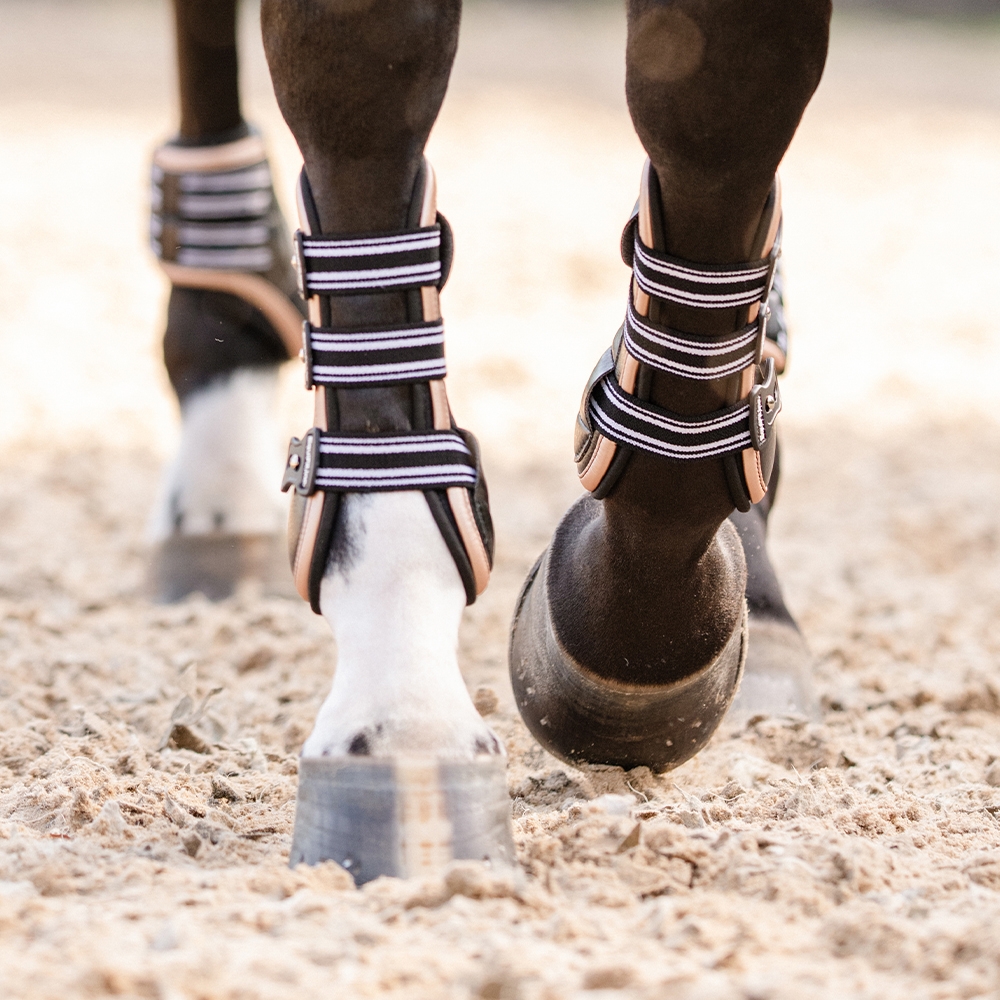
Fly season can also have an impact. Horses who are irritated by flies may stamp repeatedly, which can add strain to the feet and lower legs. A holistic approach to fly control can help support your horse’s comfort, and horse fly boots may be useful for horses who are particularly bothered around the legs.
Feed for Healthy Hooves
Hoof quality is influenced by nutrition as well as daily care. A balanced diet that provides the right vitamins, minerals, protein, and overall energy can help support healthy hoof growth.
Some horses may benefit from additional hoof support, such as biotin, particularly if they have poor-quality hooves or restricted grazing. However, supplements should not replace good farriery, daily care, and a balanced diet.
If you are concerned about your horse’s hoof quality, speak to your vet, farrier, or equine nutritionist before making major changes to their diet.
Know the Warning Signs
Not every hoof problem is obvious straight away. Regular handling and daily checks help you learn what is normal for your horse, making it easier to spot changes.
Contact your farrier or vet if you notice:
-
Sudden lameness.
-
A hot or painful hoof.
-
A strong digital pulse.
-
A deep crack or split.
-
A puncture wound.
-
A missing or twisted shoe.
-
A foul smell or black discharge.
-
Swelling above the hoof.
-
Reluctance to move, turn, or bear weight.
-
Repeated tripping or changes in movement.
If your horse is suddenly very lame, especially if there is heat, swelling, or a suspected puncture wound, contact your vet promptly. To learn more about diseases that may affect your horse's hooves and health, check out our blog on: Thrush vs Hoof Abscess vs White Line Disease.