

Horses are valuable companions in our lives, and we're very lucky to have them. But it's no fun to see your equine friends being bothered by flies. It’s a common challenge that can even hurt their health.
Sweet itch is a frustrating and uncomfortable condition that affects many horses, particularly in warmer months. It is caused by an allergic reaction to bites from midges and other insects, leading to intense itching, hair loss, and skin irritation. If left unmanaged, it can significantly impact a horse's well-being and quality of life.
But don’t worry, Horseware has you covered. We have put together this guide to help you understand the causes, symptoms, and treatment options available for keeping your horse comfortable and preventing further irritation. For the colder months, be sure to check out our guide on Keeping your Horse Comfortable.
Sweet itch, also known as equine insect hypersensitivity, is an allergic reaction to bites from midges (Culicoides spp.).
It is one of the most common skin conditions in horses, causing intense itching and irritation. This hypersensitivity occurs when a horse’s immune system overreacts to proteins in the saliva of biting insects, leading to persistent inflammation and discomfort.
Sweet itch is caused by an allergic reaction to insect bites, particularly from midges and mosquitoes.
The saliva from these insects triggers an overactive immune response, leading to inflammation, itching, and skin damage. Certain horses may be genetically predisposed, and environmental factors such as warm, humid climates can increase the risk. Stagnant water, dense vegetation, and poorly ventilated stables can also contribute to midge infestations, exacerbating the condition. For expert tips, check out our guide on Effective Fly Control for Horses.
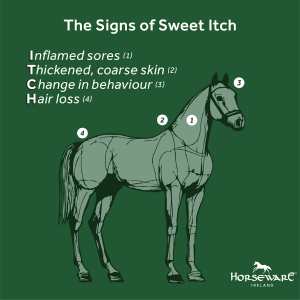
Early signs of sweet itch include small, itchy bumps, usually around the mane, tail, and belly.
As the condition progresses, affected horses may develop hair loss, crusty skin, and open sores due to excessive rubbing. Severe cases can result in thickened skin, extreme discomfort, and secondary bacterial infections that require veterinary intervention.


There is no absolute cure for sweet itch, but management and treatment options can help reduce symptoms. Some effective treatments include:
Prevention is key when dealing with sweet itch. Here are some proactive measures to minimise flare-ups:
One of the best ways to protect horses from biting insects is by using fly blankets.


Diet can play a role in managing sweet itch. Providing a nutritionally balanced diet can support the immune system and promote skin health. Consider including:
Sweet itch cannot always be cured, but it can be effectively managed with a combination of insect control, protective blankets, dietary support, and veterinary treatments.
No, sweet itch is not contagious. It is an allergic reaction to insect bites and cannot spread from horse to horse.
Some horses benefit from allergy desensitisation injections, but the results vary. Consult your veterinarian to see if this treatment is suitable for your horse.
Horses can develop sweet itch at any age, but symptoms often appear within the first few years of life if the horse is genetically predisposed.
Investing in the right fly prevention gear is essential for managing sweet itch. Check out our guide on the best fly boots for horses and explore Horseware’s range of protective rugs and accessories to keep your horse comfortable all season long.