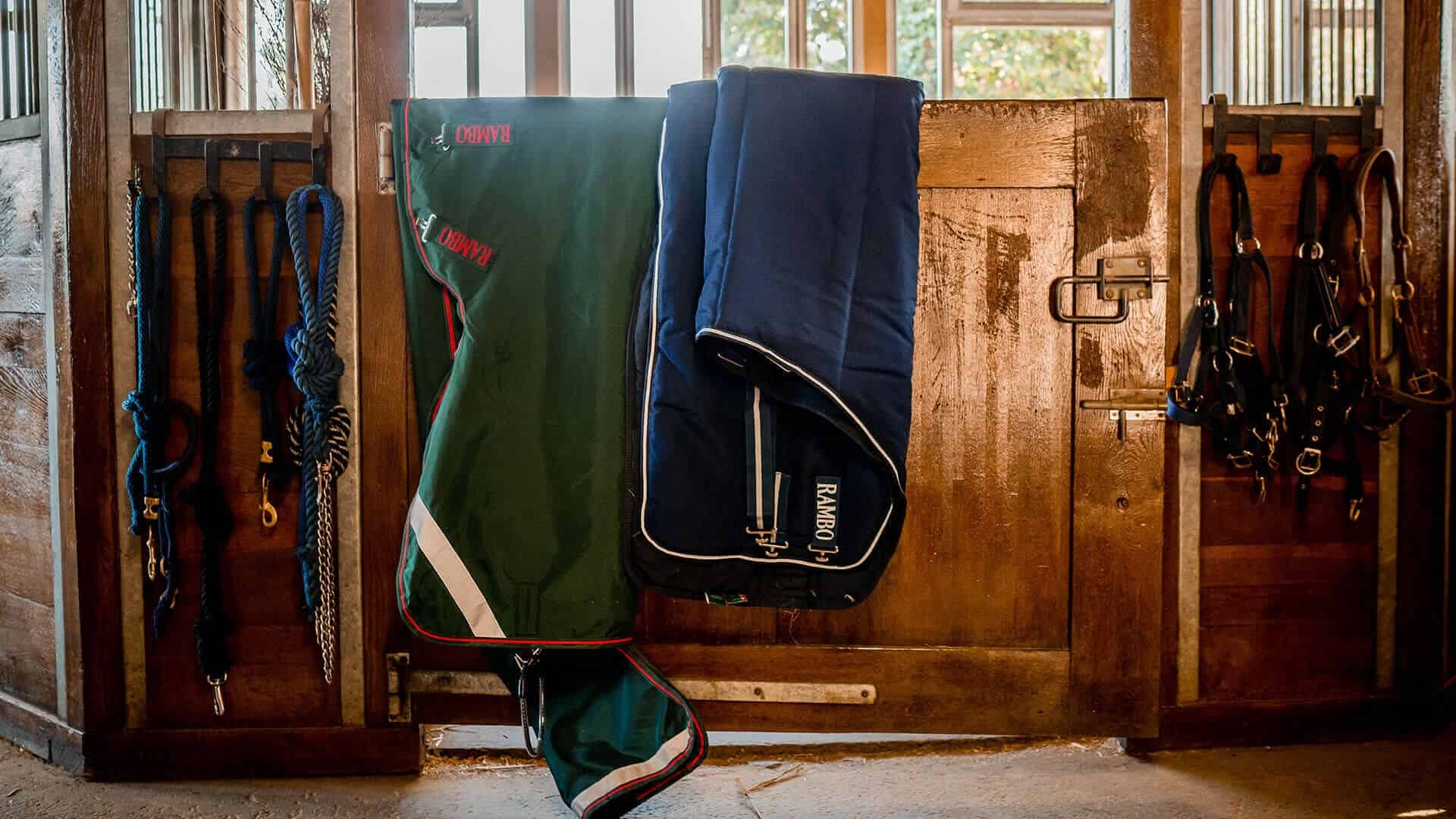
Sometimes it feels like our horses have a more extensive closet than us. Fly and cooler blankets for the summer, stable and turnout blankets for winter, plus all those in-between blanket weights for spring and fall. To make space for the ones you actually need, it’s a good idea to store the blankets you won’t be using during the off-season.
Washing and storing horse blankets isn’t just great for saving space but it maximizes the life of your horse’s blankets too. Dirt, mud, and ammonia from urine can impact the fabric, causing it to degrade over time. We’ll go through the steps of washing, re-proofing, and storing your blankets so your horse can continue to use them for many seasons to come.
Deciding Which of Your Horse’s Blankets to Store
The first step is to select which blankets to pack away until the next season. If you have limited storage at your barn this will free up space so you can easily access the blankets your horse needs daily.
Some blankets are useful to have nearby all year round. A lite weight turnout is useful for unexpected spring or summer showers, while a cooler is good after exercise or during travel. However, you’re unlikely to need a heavy weight turnout or stable blanket in the warmer weather and equally a fly blanket isn’t much use during a winter snowstorm.
Examining Your Horse’s Blankets for Damage
Checking for any rips or tears is a good habit to get into. Fixing damage early on prevents any tears from becoming larger and extends the life of your horse’s blanket.
For small nicks, use something like the Horseware Stormsure to repair them. Larger tears will need patching to keep the blanket waterproof and the Rambo Blanket Repair Kit offers the materials you will need to do this yourself.
It’s easiest to repair any damage to the outer fabric of the blanket before re-proofing it. This will ensure the best results for keeping it waterproof long-term.
Other areas of the blanket you should inspect include the stitching, lining, buckles, and straps. You don’t want to go to all the effort of cleaning and storing the blanket, only to discover when it’s pouring rain that the turnout you need is missing a surcingle and the buckles are broken! Some replacement parts are available from here but there are also professional blanket repair businesses that can take care of this for you.
Washing Your Horse’s Blankets
There are a few different options when it comes to washing your horse’s blankets. The easiest way is to take them to a professional blanket repair and washing service. They can fix any damage, wash the blanket, and re-proof it if required.
If you would prefer to do it yourself, here’s how to wash your horse’s blankets:
- Brush off any dirt or mud from the outer fabric and straps with a stiff brush.
- Remove any hair from the blanket lining. This can often get caught in the seams.
- For machine washing: use a cool setting and ideally a commercial washing machine that can cope with heavy-duty washing. If you are washing blankets at home, make sure your machine has the capacity to take them. Heavy weight blankets may not wash properly if they are crammed in, so perhaps stick to lighter blankets such as fleeces or liners.
- For hosing: use gentle pressure. A power washer will blast away the mud but this can damage the waterproof layer on turnouts.
- Use a wash formulated for blankets. This should be natural or non-biological to prevent damage to the fabric and avoid irritation to your horse’s skin. Horseware has a range of eco washes specifically designed for different blanket fabrics. Ensure all the soap is rinsed from the blanket.
- Hang the blanket to drip dry naturally. Don’t tumble dry your blanket.
A note on washing blankets at home… Beware of the hair! You’ll want to carefully dehair blankets before washing them in your home washing machine and run an empty cycle afterward. Otherwise, you may have horse hair stuck to your shirts in the next laundry load. I can tell you from experience that non-horsey family members don’t appreciate that… Metal buckles can also dent the inside of the drum, or be very noisy during spinning, so attaching some thick socks around the buckles can help reduce this.
Waterproofing Turnout Blankets
Looking after your turnout blankets is key to keeping your horse warm and dry. Horseware’s waterproof guarantee so you can trust your horse will stay protected from the elements. Rambo and Rhino turnouts have a three year guarantee for the waterproofness. Amigo turnouts have a one-year waterproof guarantee.
If you care for your turnouts properly, you should not need to re-proof them during the guarantee period. You may want to wash them during this time though so it’s important to follow the care instructions so you don’t damage the waterproof coating or impact your guarantee.
After the guarantee period, you may begin to notice the waterproof layer becoming less effective. Similar to washing blankets, you can use a professional service to re-proof blankets or do them yourself.
“I would recommend using a professional service to re-proof any blankets. However, if you wish to carry out a re-proof at home spray-on Nikwax Waterproofers allow for maximum coverage and targeting areas of heavy wear.” – Clare Silke, Product Innovation Manager at Horseware Ireland.
Folding and Storing Your Horse’s Blankets
Once your blankets have been washed, re-proofed if necessary, and are dry it’s time to store them away until next season. You’ll want to find a cool, dry area for blanket storage. Excessive heat, moisture, or UV exposure can damage the blankets.
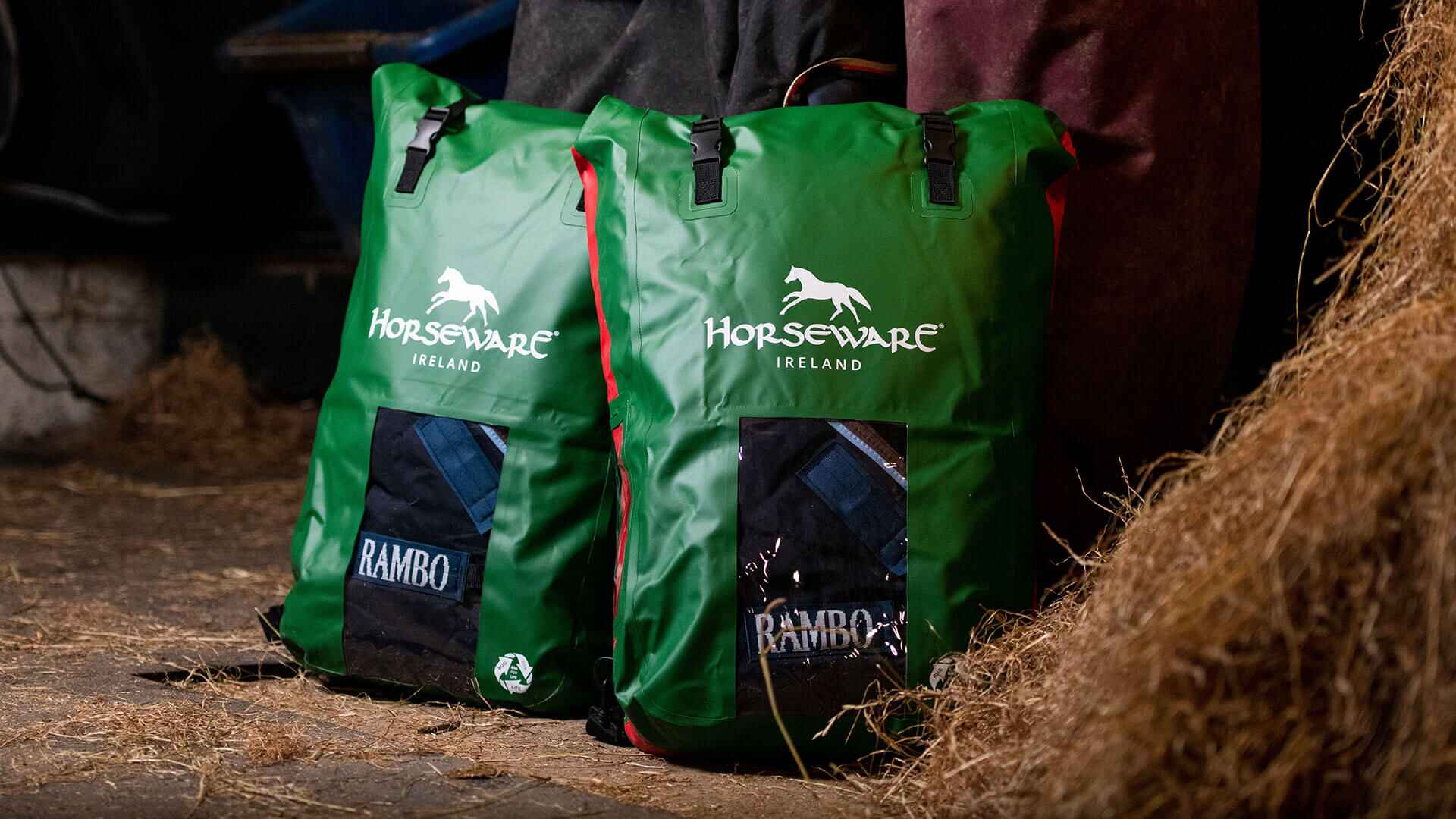
A breathable storage bag is best. The bag your blanket came in is a good option to re-use. Rambo’s latest turnouts now come with a ‘Bag for Life’. These are ideal for storing blankets and come with a side stash pocket and roll top closure for easy access.
Another option to store multiple blankets is a plastic box to keep dust, dirt, and rodents away. Vacuum sealed bags can be a great way to save space if you have lots of blankets to store.
Top Tip: write your horse’s name and the type of blanket on the storage bag or box. That way it’s easy to find the right blanket when you need it again.
The last step is to fold your blankets before packing them into a bag or box. While it can be tempting to try a few folds before giving up and shoving them into the bag, a properly folded blanket will take up less space. Check out this helpful video from @stallliebe to neatly fold your blankets for easy storage.
You’ll be grateful that you took the time to wash and pack away your blankets when next season comes and you have clean, fresh blankets to use. Not only that but properly caring for your horse’s blankets will extend their life. Which blankets will you be storing in the off-season?