
Equestrian Vacation at the Szilvásvárad State Lipizzaner Stud
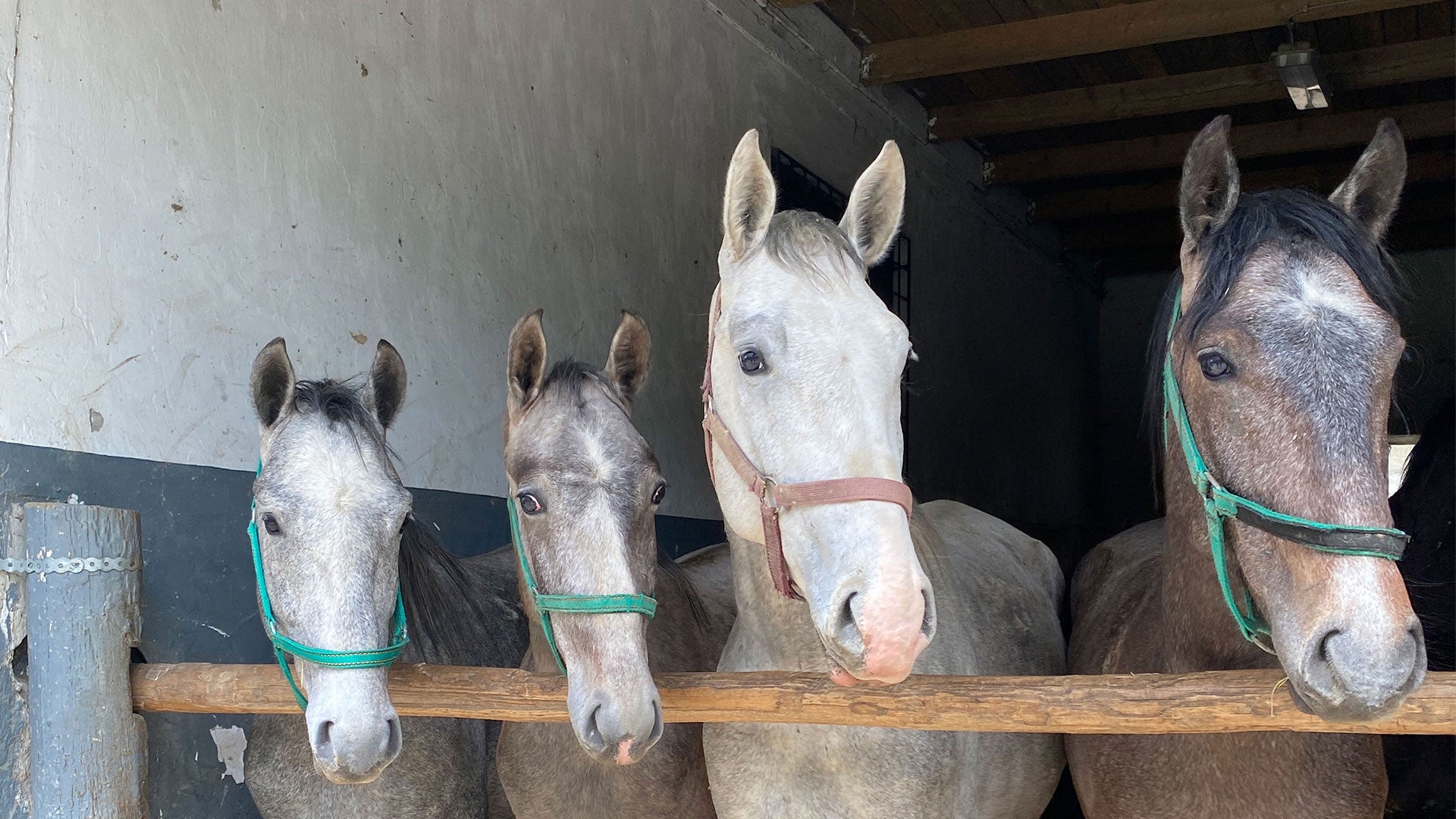
With the warm weather upon us, our thoughts are turning to where in the world we’d like to visit on horseback. Hungary, a landlocked country in Central Europe with a prestigious equestrian history, is an often-forgotten destination for horse lovers.
Horsemanship has been an integral part of Hungarian culture since the first Magyar tribes crossed the Carpathian Mountains on horseback and settled on the Danube plains during the 9th century, and equestrian values remain strong today throughout the country today.
Two hours’ drive from Budapest, in the picturesque Bükk National Park, lies Szilvásvárad, a beautiful little village that is home to one of Hungary’s premier facilities for equestrian sport: the Szilvásvárad State Lipizzaner stud. The working stud makes a perfect holiday destination for culture hounds, nature lovers and horse enthusiasts alike.
Austro-Hungarian Horses
While the importance of horses in the modern world is fading, they remain a valuable cultural heritage symbol in Hungary.
During the Hungarian-Austrian era, important state studs were established all over the empire to improve local breeding practices. Many of these studs later closed due to military and social upheavals along with agricultural motorisation, but a select few managed to survive thanks to government support. Today thes remaining studs safeguard the genetic diversity of rare horse breeds whilst maintaining traditional horsemanship values.
Lipizzaners are a protected breed in Hungary and were first established by the Austro-Hungarian monarchy four centuries ago by crossing imported Spanish and Italian stallions with local mares. While today the breed is often associated with the Spanish School of Vienna, few people know that there were once two Royal Spanish Riding School’s – one in Austria, and the other in Hungary.
The Hungarian training facility operated in Budapest until 1945 on an equal footing with the Vienna institute. Sadly, the war brought an end to the school.
On the 24th of March 1945, the Russian Army waged a fierce battle against the capital, and most of the Hungarian riders and grooms were either killed or taken as prisoners of war. Four of the school’s Lipizzaner stallions were stolen and used to pull heavy munitions into combat (never to be seen again) and another eighteen stallions were shot and eaten by the Russian Army.

The only good thing to come out of this horrific episode, was the advance warning that reached Colonel Alois Podhajsky in Vienna, who was able to escape and save some of the Piber Lipizzaner’s horses from a similar fate. There are tentative plans to reinstate Lipizzaner performances in Budapest in the future to further promote the breed and promote Hungarian horsemanship traditions.
The Szilvásvárad State Stud
The Szilvásvárad stud offers curious visitors an exciting blend of baroque culture, enchanting riding and creative inspiration.
The stud has 75 employees responsible for the nutrition, care, and training of around 300 horses residing at the stud, with facilities split into four separate zones: a central area in the village where horses are trained, and competitions take place, a mare and foal stable, a stallion station, and a property in the Csipkéskút mountains for young stallions, complete with staff accommodation, holiday apartments and enormous summer pastures.
The Hungarian government recently funded the complete restoration of the studs facilities, and the new improved equestrian center is able to accommodate thousands of spectators.
The restoration was the largest equestrian development project funded by Hungary in decades, and cost over 21 million Euro to complete. Facilities on offer include a floodlit international arena, large permanent stables, two covered arenas, and a world-class cross-country course for marathon driving.
Ride or Drive?
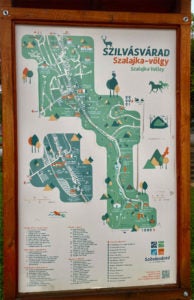
With a multitude of well-maintained tracks crisscrossing the unique natural landscape, and a welcome lack of fences to hinder the routes, the Bükk Mountains are ideal for trail riding.
Attila, the studs head rider, took me on a lovely ride behind the village via the marathon driving tracks used during the 1984 World Driving Championships. Atilla was a kind and attentive guide, full of interesting information about the area we were riding through.
The Bükk National Park is packed full of natural wonders, including more than 1,000 caves, thermal springs and waterfalls, and thick beech forests (bükk stands for “beech”). There are plenty of history-steeped cultural sites such as churches and historical buildings to enjoy from the saddle, and frequent opportunities to canter or trot through the open meadows and grasslands. I rode a sweet twelve-year-old mare named Fátyol, who handled the steep inclines and descents, and twisting turns like a pro.
Intrepid riders can book an overnight adventure to Csipkéskút, near Hungary’s northern border with Slovakia. This is where the young stallions roam in free-ranging herds for the first three years of their life, enjoying the mineral rich soil and hilly terrain of the Bükk Plateau – elements which contribute significantly to their mental and physical development.
If trail riding is not your thing, carriage driving lessons are a fantastic alternative or additional activity to add to your trip. The Szilvásvárad drivers are renowned for their accomplishments all over the world, and if you have ever been curious to pick up the reins and try carriage driving, this is the place to give it a go. Spoiler alert. It’s harder than it looks!
An Immersive Equestrian Environment
Some travelers seek out a holiday that is just about time spent in the saddle, but for others, what makes equestrian-themed travel special, is seeing how others do things, and enjoying the varying degrees of sensory immersion watching, learning, and talking to like-minded people in a different environment.
Visiting a working breeding stud instead of a purely touristic outfitter, provides much more than just the chance to get on a horse and ride – it provides plenty of opportunities to explore, learn and grow.
At Szilvásvárad, visitors can observe the staff working with and training different horses and even watch Hungarian Hussar units practicing drills with their cavalry mounts (they ride Lipizzaners too). The stud regularly hosts national and international competitions and equestrian themed events, while history buffs will appreciate the Lipizzaner Museum, which has an interesting collection of artifacts, sculptures and saddlery pieces from the past, and the extensive collection of antique carriages.
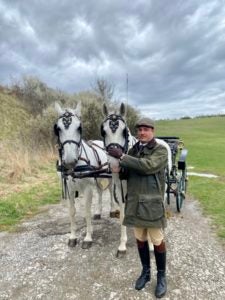
For those that prefer not to ride, or drive themselves when on holiday, another way to experience the stud and surroundings is to take a private carriage tour with a guide instead.
Sustainable Tourism
Accommodation onsite can be booked as part of an all-inclusive package directly with the stud, this takes the guesswork out of where to stay and what to do every day, while helping contribute to the preservation of the Lipizzaners.
The upper floor of the stallion barn has been carefully refurbished and turned into a small guest house. Seven rooms in the turn-of-the-century building have been restored, each complete with a fridge, desk and ensuite bathroom.
I was one of the first guests to stay in the new accommodation and adored the suggestive atmosphere (you can hear the stallions whinnying below) and enjoyed the carefully thought-out details in the room, such as artisan furniture with hand painted Lipizzaner motifs and classical riding prints on the walls.
The rooms are only a 5 minute walk from the village hub, where visitors can enjoy a wide array of restaurants and shops. There is also a nice local Spa, if you have time to include an afternoon of peace and pampering.
Hungarian food and wine is hearty, generous and tasty. Think rich stews like goulash, stuffed cabbage leaves, lángos (fried dough smothered in sour cream and cheese) or fried seasonal vegetables. Fish is a popular local dish due to the many trout farms nearby, and it often appears fried (covered in cheese or sauce) or in a spicy fish soup. Most main dishes are eaten with a köret, or side dish or a salad. The best-known wine of the region is Bikaver (Bulls Blood) a dry red wine made using at least four grape varietals. I ate at a different restaurant each meal, since the village was so nice and handy (a luxury for a riding holiday).
How to get there:
The nearest airport to Szilvásvárad is Budapest (BUD). The easiest way to travel is by hiring a car at the airport (the drive takes around two hours), but if you are taking public transport, Volanbusz operates a bus from Budapest to Szilvásvárad once daily. Tickets cost €6 – €9 and the journey takes just under three hours.
For more information, please visit https://www.menesgazdasag.hu/hu/.


Share on Facebook

Share on X

Share on Pinterest

Share on LinkedIn

Share on Copy