
From Turnout to Stable: A Complete Guide to Horse Blankets
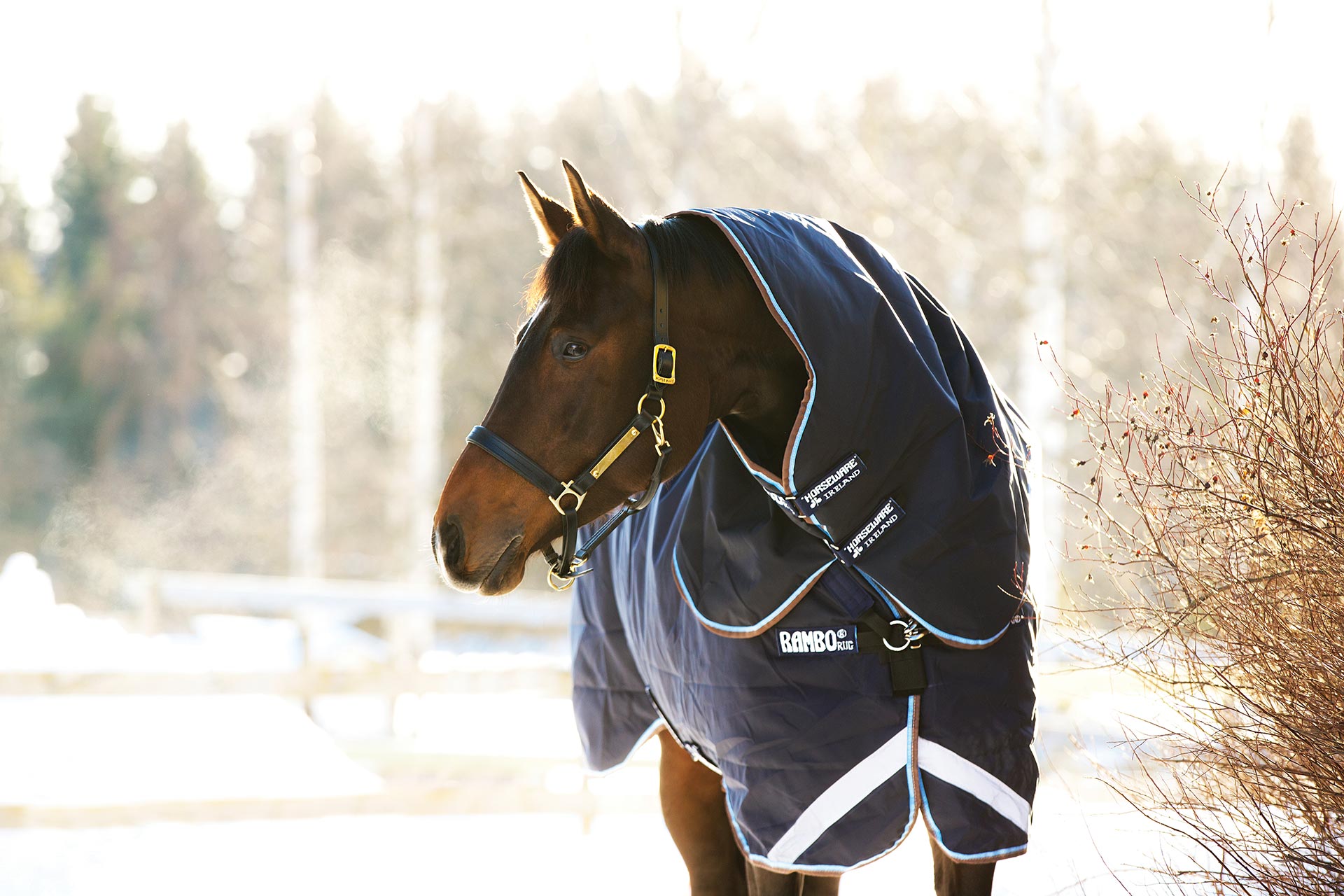
From Turnout to Stable: A Complete Guide to Horse Blankets
| September 29, 2022
| 20 min read
With the cold season approaching, selecting the right horse blanket can make all the difference in your horse’s comfort and well-being. It’s easy to spend hours online instead of in the saddle researching whether to blanket or not, what style is best for your horse, and what the differences in cuts are. In this detailed horse blanketing guide, Horseware Ireland will answer your questions about blanketing basics. We’ll cover the features and benefits of horse blankets, factors influencing blanket choice, and how to select the best blanket to suit your horse’s needs.
We will explore the different styles, fabrics, and features that will help you make an informed decision, ensuring your horse stays warm and dry in any weather.
What is a Horse Blanket?
Horse blankets are a protective covering designed to help regulate a horse's body temperature, especially during colder weather. Blankets come in different styles, weights, and materials to cater to various climates and horse care needs. From lightweight sheets for mild weather to heavy-duty blankets for freezing conditions, the right horse blanket can offer warmth, protection from rain and wind, and even prevent coat damage.
Why Do Horses Need Blankets?
Horses need blankets for a variety of reasons, but the most common is to help regulate their body temperature during colder months. Some horses grow thicker winter coats, but others, such as clipped horses, older horses, or those in poor health, may need the extra warmth provided by a blanket.
- Weather Conditions: Horses living in climates with cold, windy, or wet winters can benefit from blankets that keep them dry and warm. A turnout blanket can protect a horse from rain, snow, and wind.
- Horse Coat: Horses with thin coats or those that are clipped require blankets to replace the insulation lost when their natural coats are removed.
- Living Environment: Horses that live outside or in drafty barns may need more blanket protection than those kept in heated or sheltered stables.
Types of Horse Blankets
In this section, we will explore the various types of horse blankets available to provide comfort and protection for your equine companion, especially as we approach the winter months. Understanding the different options will help you choose the most suitable blanket for your horse's needs.
Turnout Blankets
Turnout blankets are designed for outdoor use and are typically waterproof. They protect horses from rain, wind, and snow while allowing them to move comfortably in the field. Turnout blankets come in a range of thicknesses depending on the weather conditions and the horse’s needs. Essential turnout features designed for outdoor use include reflective materials for enhanced visibility and leg arches that provide maximum freedom of movement.
Traditionally, horses wore their turnout blanket in the field and then changed to a stable blanket overnight when stabled. However, since blanket technology has progressed in terms of waterproofing and breathability, some owners use a turnout blanket in the stable too. However, even if you use a turnout for both inside and outside use, consider switching to a heavier weight blanket if the temperatures are likely to drop during the evening. Also, remember to regularly remove the blanket to check for any pressure points or rubs. After heavy or prolonged rain, it is also advisable to check your horse is still completely dry under their turnout in case you need to change to a different blanket.
Stable Blankets
Stable blankets are used when a horse is indoors, typically in a stable. They provide warmth and comfort for stable use overnight. The outer fabric is the main difference between a turnout and a stable blanket. This will be a waterproof layer on a turnout blanket to keep your horse dry on rainy days. As a stable already offers shelter from the elements, this waterproof outer isn’t necessary on a stable blanket.
Coolers and Cooling Sheets
Coolers are lightweight, breathable blankets used after exercise to wick moisture away from the horse’s coat and help it cool down slowly. Cooling sheets prevent horses from getting chilled while drying off after exertion or after a bath
Exercise Sheets
Exercise sheets are typically used while riding in cold weather. They cover the horse’s hindquarters and help retain heat, keeping muscles warm during light work, warm-ups and cool-downs. They also provide protection from wind and rain, ensuring your horse stays comfortable while exercising in varying weather conditions.
Understanding Blanket Fill and Denier
Fill Levels (Lightweight, Medium, Heavy)
Fill refers to the amount of insulation within the blanket. The three common levels of fill are:
- Lightweight (0-100g): Ideal for mildly cold weather or horses with thick winter coats. These blankets offer minimal warmth but can help keep a horse dry.
- Medium Weight (150-250g): These are versatile blankets that provide warmth during colder conditions, typically used in fall or early winter.
- Heavyweight (300g and above): Designed for severe winter conditions, heavyweight blankets offer maximum warmth for horses that feel the cold or are clipped.
Some blankets in Horseware’s range use Vari-layer® technology for more heat retention with less weight. There are different layers of thermobonded fiberfill, for example a heavy weight blanket with Vari-layer® has three layers that are 150g each. This allows the blanket to fit snugly to the horse’s body, providing more belly coverage and trapping heat. It’s lighter for you to put the blanket onto your horse and for them to wear – a win all-round!
Denier Strength
Turnout blankets use different fabrics such as polyester, polypropylene, and ballistic nylon. These fabrics are used for the outer layer of the blanket and they vary in strength. The type of fabric is typically accompanied by its denier. Denier refers to the thickness and strength of the fabric. The higher the denier, the more durable the fabric.
Different fabrics can’t be directly compared by denier as each one differs in overall strength. The Rhino Plus is 1000D polypropylene so is stronger, lighter, and more durable than a blanket that is 1200D polyester.
For example, the Rhino Plus turnout blanket has a 1000D polypropylene outer, where the "D" stands for denier. A higher denier indicates it is stronger, when comparing the same type of fabric, as it means that there are more yarns within each thread. Using the same Rhino Plus as an example, it has 1000 yarns within each thread.
It's important to note that different fabrics can’t be directly compared by denier as each fabric has different overall strength properties. For example, the Rhino Plus is 1000D polypropylene so it is stronger, lighter, and more durable than a blanket that is 1200D polyester, although 1200D seems thicker than 1000D. That is because polypropylene provides greater strength and resilience at a lower weight compared to polyester.
Horseware’s turnout blanket collection:
- Amigo range has a polyester outer (strong)
- Rhino range has a polypropylene outer (stronger)
- Rambo range has a ballistic nylon outer (strongest)
Choosing the Right Blanket for Your Horse
When it comes to choosing a blanket for your horse, there isn’t a one-size-fits-all solution. Selecting the best blanket for your horse requires considering several different factors beyond the fabric and design, including age, breed, coat type, and living conditions.
Some horses, such as those that are naturally hardy, may only need a light blanket, while others, such as clipped horses or those with thin coats, will require heavier protection.
Additionally, horses that live outdoors or in regions with wet winters will need waterproof blankets.
Type, Age & Condition
Consider age and condition when deciding whether to blanket horses. Older horses, or those that struggle to keep their condition, will benefit from a blanket to maintain weight in winter. Horses naturally gain weight in spring and summer, so blanketing can help them keep it in winter. Access to good quality forage can also help keep horses warm from within. More hay may be needed in winter for extra energy to stay warm when temperatures drop.
Clipping
As autumn approaches, horses shed their summer coat to make way for a thicker winter coat. You might choose to clip your horse for various reasons such as saving time, grooming for shows, or preventing the horse from getting sweaty while being ridden. Clipping removes the natural insulation, so using a blanket becomes necessary to replace the insulation. The amount of hair removed by clipping will determine the type of blanket needed. Using a blanket also helps to prolong the amount of time before you have to reclip.
Time With Your House
Between friends, family, and work we know your time with your horse is valuable. The last thing you want to do after rushing to the barn after work is spend hours drying and grooming your horse so you can tack up. Consider using a turnout blanket, even if it’s a light-weight one with no fill, to keep your horse clean and dry. Now you won’t have to choose between going for a hack or getting all your chores done.
Adapting to Different Climates
Horses that are moving to a new home may need some time to adapt. You may want to use blankets if your horse is traveling from a warmer climate to somewhere cooler, for example from Florida to the Northeast. Horses are good at acclimatizing though so usually by the following winter, they will have a thicker winter coat.
Did you know that horses have a thermoneutral zone of between 41°F and 77°F, whereas humans have a thermoneutral zone of around 77°F to 86°F? The thermoneutral zone is where little or no extra energy is required to keep you or your horse at a comfortable temperature. Horses have a much wider thermoneutral zone than humans so just because you need to wear a jacket, your horse doesn’t necessarily need another layer.
Windy and rainy conditions also influence rug choice alongside the temperature. When your horse is wet or there is a wind chill, they are not able to retain heat as effectively. A turnout blanket has a waterproof outer, so it helps to keep your horse’s core body temperature consistent. A blanket can also offer protection against skin irritations like rain scald.
Trust Your Instincts
Trust your own instincts when it comes to blanketing your horse. You know them best so try not to be swayed by what other owners are putting on their horses. Their horses likely have different needs to yours. Assess their needs throughout autumn and winter. Even if you start with no blanket, you may need to change to a lightweight turnout as the weather gets wetter. Equally, once the temperatures start to drop or you clip your horse you might want to opt for a heavy rather than medium-weight one. Ultimately, keeping our horses comfortable is what we are all aiming for when blanketing.
Key Features to Look for in a Horse Blanket
Horse Blanket Size
To ensure the comfort of your horse and to prevent rubbing and slippage, it’s important you find the right size blanket. Even if you think you know what size blanket your horse wears it’s always best to measure to make sure. Sizing can vary between brands and your horse’s shape can change over time, so always measure your horse and check the brand's sizing guidelines to ensure the blanket fits properly. Horseware has many different blanket styles to suit all shapes and sizes.
Front Closures & Straps
Closures are important to secure the blanket in place. Look for adjustable front closures and leg straps that fit snugly but allow the horse to move freely.
Our different styles of blankets use one of these fittings:
- Classic Straight Front Closure – two front fastenings backed with Velcro that are easy to use. Suits horses with a narrower build.
- V-Front Closure – reduces pressure on the shoulders when moving or grazing. The non-swivel trigger clips should be done up inwards and facing the horse’s chest.
- Disc Front Closure – unique to Horseware, this lightweight closure is very light and safe. It prevents catching thanks to its ergonomic design that lays flat against the horse.
Blanket Linings & Styles
Both stable and turnout blankets often use a polyester lining which is breathable and smooth. Some of Horseware’s blankets also have an antibacterial and anti-static lining to boost shine.
Our horses come in lots of different shapes and sizes, so our blankets do too!
Classic Cut
- Sits in front of the withers and frames the horse’s neck
- Classic straight front closure
- Well suited to fine-boned or narrow horses, as well as youngsters
Surefit
- Sits beyond the withers to avoid pressure
- Disc Front or V-front fastening
- Suits lots of horses – very versatile
- Great for horses with broader chests or that are well-built
Wug
- High neck design to avoid pressure on the withers
- V-front fastening
- Perfect for narrower horses with high withers
All-in-one
- No seam between the neck cover and the blanket
- Avoids placing pressure on the horse’s withers
- Consistent fill from ears to tail
Plus
- Includes detachable neck cover
- Velcro loop system to attach the neck cover
- Neck cover can be removed to match changing weather conditions
How to Measure Your Horse for a Blanket
To ensure a proper fit, it’s essential to measure your horse accurately. A poorly fitted blanket can cause discomfort, rubbing, or even injury.
- Step 1: Start by placing a measuring tape at the center of your horse’s chest.
- Step 2: Run the tape along the horse’s side, all the way to the point of its rump (just before the tail begins).
- Step 3: Record the measurement in inches. This number is the size you will use when selecting a blanket.
Always round up to the nearest inch if your measurement falls between sizes to ensure comfort. If your horse is between sizes, you can size down in lightweight blankets with no fill. For a step-by-step video on how to measure your horse and properly fit your blanket, check out our blanket fitting guide for more details.
How to Fit a Horse Blanket
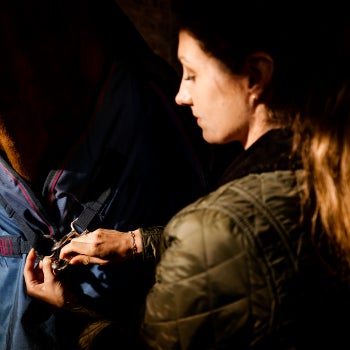
Comfort is not just about the right weight, style and type of horse blanket. Accurate fit is crucial for comfort and functionality. It's equally important to regularly check the fit over time, as webbing straps can loosen. Be sure to adjust any fittings as needed—blankets that are too loose can become insecure and may cause rubbing.
Here’s how to check and ensure the right fit:
Front Straps
Ensure the blanket overlaps at the front and the top strap is in line with the point of the shoulder. The top and bottom strap should be fastened to the same hole even if this makes the bottom strap looser. This allows your horse enough movement in their chest. You should be able to easily fit your hand underneath the front of the blanket.
V-Front Closure
Check that the diagonal top strap is in line with your horse’s shoulder groove and the straight strap with the point of the shoulder. The trigger clips need to face the horse’s chest so they are done up inwards to avoid catching on anything.
Surcingles
The straps that go under the belly are known as surcingles. Depending on the design of the blanket there could be two or three and they help keep the blanket in place. Make sure you can fit four fingers vertically between the surcingles and your horse’s belly.
Tail Straps
Some blankets use leg straps but Horseware’s blankets are designed to fit securely without them. Instead, a tail strap prevents the rug from blowing in windy weather. You should be able to fit a flat hand between the horse and the strap with the tail over the top of the strap.
Caring for Your Horse Blanket
Horseware has been making blankets for life since 1985. Here’s how to look after your blanket to maximize its longevity:
Keeping It Clean
“One of the best things owners can do both for maintaining their turnouts and their horses’ coats and manes is regularly removing rugs and practicing good grooming.” Clare Silke, Product Innovation Manager at Horseware Ireland.
Reduce the build-up of grease and hair with daily grooming. Using a mane and tail conditioner keeps the mane smooth and reduces rubbing. Clare also suggests cleaning the inside of the neck cover before spraying it with show shine to help repel dirt and allow it to move freely with your horse.
Washing and Waterproofing
Proper care will extend the life of your horse's blanket. Most blankets can be machine washed, but always follow the care instructions. After washing, allow blankets to drip dry to avoid damage to waterproof coatings.
Whilst the blanket will not need reproofing during the guarantee period, you may want to wash it by following these steps:
- Gently brush off any dirt
- Hose off the turnout (do not use a power washer)
- Use a non-biological wash, or one formulated for blankets e.g. Rambo Wash
- Wash on a cool setting if using a washing machine
- Allow the blanket to drip dry away from heat
- Store the blanket in a cool, dry area, preferably in a breathable storage bag
- Avoid exposing the rug to heat or UV
It is inevitable that the waterproof coating will begin to break down over time. After the waterproof guarantee of your blanket has ended, you may want to use a professional service to reproof it. Alternatively, you can use a spray-on waterproof treatment to do it yourself. If your blanket is no longer waterproof due to damage you’ll need to assess if it can be repaired, or if it would be more cost-effective to purchase a new blanket.
Managing Rips And Tears
Checking regularly for any tears can help prevent permanent damage to the rug. Repairing the rips to seal and waterproof them with something like a blanket repair kit can increase the life of your blanket and save you having to purchase a new one.
Storage Tips
Store blankets in a clean, dry area when not in use. Use storage bags or vacuum-sealed bags to protect them from dust and pests. Make sure the blankets are completely dry before storing them to prevent mildew and odor buildup.
Knowing When to & When Not to Blanket Your Horse
Regularly checking how your horse is feeling will ensure they are comfortable in their blanket despite changing weather conditions. If we could simply ask our horses if they’re too hot or cold, and what blanket they’d like to wear, everything would be much easier. Since that’s not an option, it’s up to us to spot the signs, to know when to adjust their blankets accordingly.
How Your Horse Stays Warm
Horses naturally generate warmth through the digestion of hay and foraging. However, when temperatures drop significantly, they may require blankets to help maintain body heat, especially if they are clipped or elderly.
H3: Signs Your Horse is Too Cold
- Shivering
- Tucked up tail to try and keep warm
- Huddling with other horses or seeking shelter
- Change in behavior e.g. pacing to warm up
- Loss of condition – typically a more long-term sign that they’re too cold
Quick Tip:
On very cold or wet days, taking your horse into a stable will provide a break from the weather and give them a chance to warm up. Horses that are wet will need a cooler to wick away moisture and stop them getting chilled.
Signs Your Horse is Too Hot
- Sweating – this can be under the blanket, along the neck, or behind the ears
- Heavy breathing.
- Change in behavior e.g. listless or agitated.
- Rubbing the blanket to try and remove it.
Quick Tip:
Place your hand under the blanket behind their withers to feel how warm they are. This is a better way to gauge their temperature than by feeling the ears or legs which are exposed to the elements.
Remove blankets from horses that are too hot. If they are sweaty, wash them off and walk them around to dry. A cooler can also come in handy here.
Always remember, that over-blanketing can lead to more problems than under-blanketing, such as skin infections from sweating and rub marks. There are also longer-term issues related to excessive overheating including signs of colic, weight gain, and an increased risk of laminitis. Opting for a lighter-weight blanket if you’re uncertain is usually the better option.
Enhancing Your Blanket Options: Neck Covers and Liner System
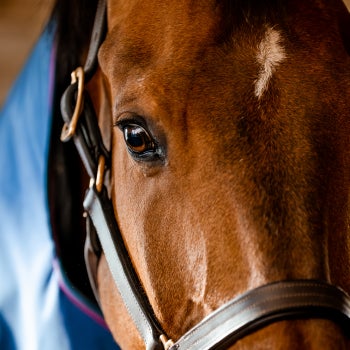
To expand your blanket options, you can use a neck cover to keep your horse's whole body at a consistent temperature. This is especially beneficial for "poor-doers" or older horses. Many blankets have detachable neck covers, allowing for their removal on warmer days. Additionally, instead of layering multiple blankets, you can use liners attached to liner loops in the blanket. Liners are easy to clean and can be used in both stable and turnout blankets, providing a cost-effective way to increase your blanketing options.
Frequently Asked Questions
How do you pick the right blanket for a horse?
To pick the right blanket, consider your horse’s living environment, age, coat thickness, and activity level. Horses that spend a lot of time outdoors need a turnout blanket, while indoor horses can use stable blankets.
At what temperature do horses need blankets?
As a general guideline, horses may need blankets when temperatures fall below 40°F, but this depends on whether they are clipped and their natural tolerance to the cold.
How heavy of a blanket should I put on my horse?
The weight of the blanket depends on the temperature and the horse's individual needs. Use a lightweight blanket in mild weather and a heavyweight blanket in freezing conditions.
How Do I Know Which Fabric And Denier To Choose?
When selecting a blanket, consider your horse and their environment. If they are a known blanket destroyer or turned out with other horses prone to biting blankets, you might opt for a high denier ballistic nylon blanket. The Rambo range is super tough and has a slippery outer to prevent horses gripping the fabric with their teeth.
Look for a rug with a high waterproof and breathability rating if your horse is turned out all day in adverse weather conditions or 24/7. The Rhino and Rambo turnouts use Aquatrans technology. This means their fabric can withstand 10m of water in 24 hours and allow 3000g of vapor to pass through 1m2 of fabric in 24 hours.
What do the numbers on horse blankets mean?
The numbers often refer to the blanket's denier, which indicates fabric strength, and fill weight, which refers to the insulation level. A higher denier means stronger fabric, and a higher fill number indicates more warmth.
How to properly blanket a horse?
Make sure the blanket fits well, without tightness around the shoulders or too much slack. Regularly check under the blanket to ensure there are no pressure points or areas of discomfort.
Choosing the right blanket for your horse involves understanding its individual needs and the climate it lives in. With the right fit, proper care, and appropriate use of blankets, your horse will stay comfortable, warm, and healthy throughout the colder months.
Browse our range of horse blankets today. Don't miss out on the benefits, and watch your horse stride confidently through every season!

Share on Facebook

Share on X

Share on Pinterest

Share on LinkedIn

Share on Copy