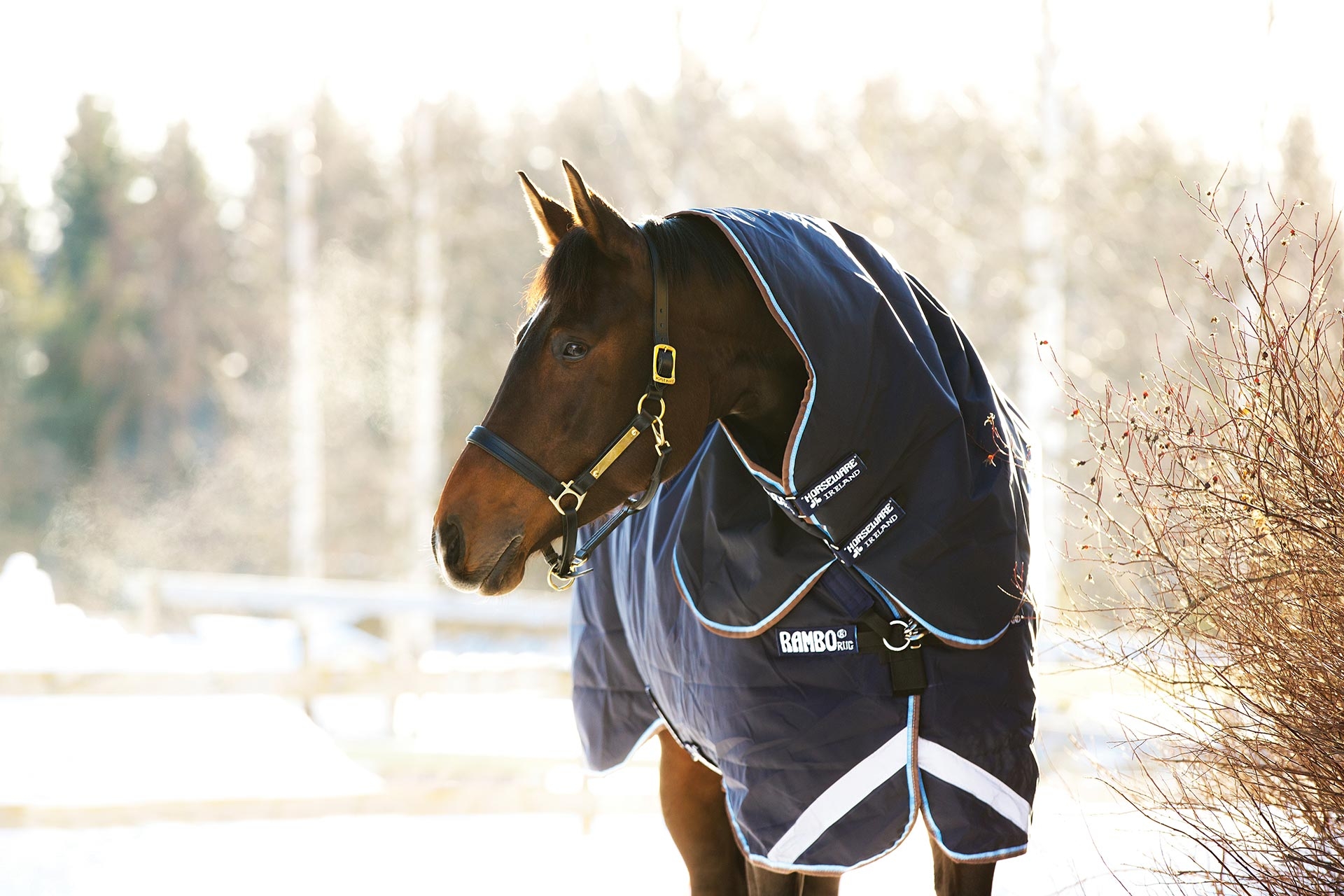
Keeping our horse comfortable is what we are all aiming for when rugging. We have covered the different features of rugs and what factors influence the type of rug your horse needs in this series so far. These play into overall comfort but we need to assess how our horse is feeling in the rug – are they too hot? Too cold? We will show you how to recognise the signs and how to address them.
Rug fit is also crucial in ensuring your horse is dry, warm, and happy. Check out our tips for a properly fitting rug and we even have some rug maintenance advice so they last for many years to come.
To understand how your horse is feeling in their rug it’s important to know what ‘normal’ looks like for them. A daily check will help you recognise any changes that may be related to their rug or general health.
If we could simply ask our horses if they’re too hot or cold, and what rug they’d like on everything would be much easier. Since that’s not an option, it’s up to us to spot the signs:
Signs Your Horse is Too Cold
- Shivering
- Tucked up tail to try and keep warm
- Huddling with other horses or seeking shelter
- Change in behaviour e.g. pacing to warm up
- Loss of condition – typically a more long-term sign that they’re too cold
Signs Your Horse is Too Hot
- Sweating – this can be under the rug, along the neck, or behind the ears
- Heavy breathing
- Change in behaviour e.g. listless or agitated
- Rubbing the rug to try and remove it
Quick Tip: Place your hand under the rug behind their withers to feel how warm they are. This is a better way to gauge their temperature than by feeling the ears or legs which are exposed to the elements.
What to do if Your Horse is Too Hot or Too Cold
During the transition from autumn to winter you may find your horse is too hot or too cold. If you recognise they are not at the right temperature, it’s time to act.
On very cold or wet days, taking your horse into a stable will provide a break from the weather and give them a chance to warm up. Horses that are wet will need a cooler rug to wick away moisture and stop them getting chilled. Cold horses will appreciate another rug or a liner, as well as some extra forage.
Remove rugs from horses that are too hot. If they are sweaty, wash them off and walk them around to dry. A cooler rug can also come in handy here.
To prevent your horse becoming too hot or too cold, it’s important to monitor the weather and rug for the current conditions. Rugs will need to be adjusted throughout the season and even on a daily basis.
There are a few ways to increase your rug options to suit different conditions without having to purchase one in every type and weight:
Neck Covers
Keep your horse’s whole body at a consistent temperature with the help of a neck cover. There are lots of important muscle groups in the neck so the use of a neck cover helps to keep them warm. ‘Poor-doers’ or veterans will especially benefit from this to help keep their condition over the winter. Not only that but a neck cover helps to make a clip last longer so your horse’s neck doesn’t look hairier than the rest of their body.
Lots of rugs have a detachable neck cover so you can remove them on warmer days. This will help to prevent your horse overheating and allow them to soak up some vitamin D.
Liner System
Instead of layering up multiple rugs, you can use liners instead. As the liners are attached to liner loops in the rug, they don’t slip around like layered rugs can. They are an easy way to add extra warmth to a rug and they help to trap warm air whilst still being breathable.
Another benefit is that they can fit into a domestic washing machine for easy cleaning. Liners can be used in both stable and turnout rugs so this is a cost-effective way to increase your rugging options without having to purchase a rug in every type and weight.
Over Vs Under-Rugging
Choosing a rug in the middle of winter isn’t too difficult but it can be a bit trickier in spring and autumn. With cold temperatures first thing in the morning but warm and sunny conditions forecast for the afternoon, what rug are you supposed to use?
Horses are good at regulating their own body temperature. They have different ways to warm themselves up such as finding shelter, moving more, or eating. However, a horse that is wearing a rug that is too warm will have a much harder time trying to cool down.
Over-rugging can lead to more problems than under-rugging, such as skin infections from sweating and rub marks. There are also longer-term issues related to excessive overheating including signs of colic, weight gain, and an increased risk of laminitis. Opting for a lighter weight rug if you’re uncertain is usually the better option.
Fitting a Rug
Comfort is not just about the right weight and style of rug but the fit too. Here’s how to check the fit:
Size
Even if you think you know what size rug your horse wears it’s always best to measure to make sure. Sizing can vary between brands and your horse’s shape can change over time. Find out how to measure your horse in our fitting guide. If your horse is between sizes you can size down in light weight rugs with no fill.
Front Straps
Ensure the rug overlaps at that front and the top strap is in line with the point of shoulder. The top and bottom strap should be fastened to the same hole even if this makes the bottom strap looser. This allows your horse enough movement in their chest. You should be able to easily fit your hand underneath the front of the rug.
V-Front Closure
Check that the diagonal top strap is in line with your horse’s shoulder groove and the straight strap with the point of shoulder. The trigger clips need to face the horse’s chest so they are done up inwards to avoid catching on anything.
Surcingles
The straps that go under the belly are known as surcingles. Depending on the design of the rug there could be two or three and they help keep the rug in place. Make sure you can fit four fingers vertically between the surcingles and your horse’s belly.
Tail Straps
Some rugs use leg straps but Horseware’s rugs are designed to fit securely without them. Instead, a tail strap prevents the rug from blowing in windy weather. You should be able to fit a flat hand between the horse and the strap with the tail over the top of the strap.
Checking Fit Over Time
Webbing straps can loosen over time so be sure to check any fittings in case they need to be adjusted. Rugs that are too loose are less secure and could cause rubbing.
Looking After Your Horse Rug
Horseware has been making rugs for life since 1985. Here’s how to look after your rug to maximise its longevity:
Keeping it Clean
“One of the best things owners can do both for maintaining their turnouts and their horses’ coats and manes is regularly removing rugs and practising good grooming.” Clare Silke, Product Innovation Manager at Horseware Ireland.
Reduce the build-up of grease and hair with daily grooming. Using a mane and tail conditioner keeps the mane smooth and reduces rubbing. Clare also suggests cleaning the inside of the neck cover before spraying it with show shine to help repel dirt and allow it to move freely with your horse.
Rips and Tears
Checking regularly for any tears can help prevent permanent damage to the rug. Repairing the rips to seal and waterproof them with something like the Rambo Rug Repair Kit can increase the life of your rug and save you having to purchase a new one.
Washing & Waterproofing Your Horse Rug
All of Horseware’s turnout rugs have a waterproof guarantee. To ensure the waterproof coating isn’t damaged it’s important to follow the care instructions. Whilst the rug will not need reproofing during the guarantee period, you may want to wash it by following these steps:
- Gently brush off any dirt
- Hose off the turnout (do not use a power washer)
- Use a non-biological wash, or one formulated for rugs e.g. Rambo Wash
- Wash on a cool setting if using a washing machine
- Allow the rug to drip dry away from heat
- Store the rug in a cool, dry area, preferably in a breathable storage bag
- Avoid exposing the rug to heat or UV
It is inevitable that the waterproof coating will begin to break down over time. After the waterproof guarantee of your rug has ended, you may want to use a professional service to reproof it. Alternatively, you can use a spray-on waterproof treatment to do it yourself. If your rug is no longer waterproof due to damage you’ll need to assess it if can be repaired, or if it would be more cost-effective to purchase a new rug.
Regularly checking your horse will ensure they are comfortable in their rug despite changing weather conditions. Once your horse has a rug that suits them, be sure to take care of it so it can look after your horse for many seasons to come. To view Horseware Ireland Turnouts, click here