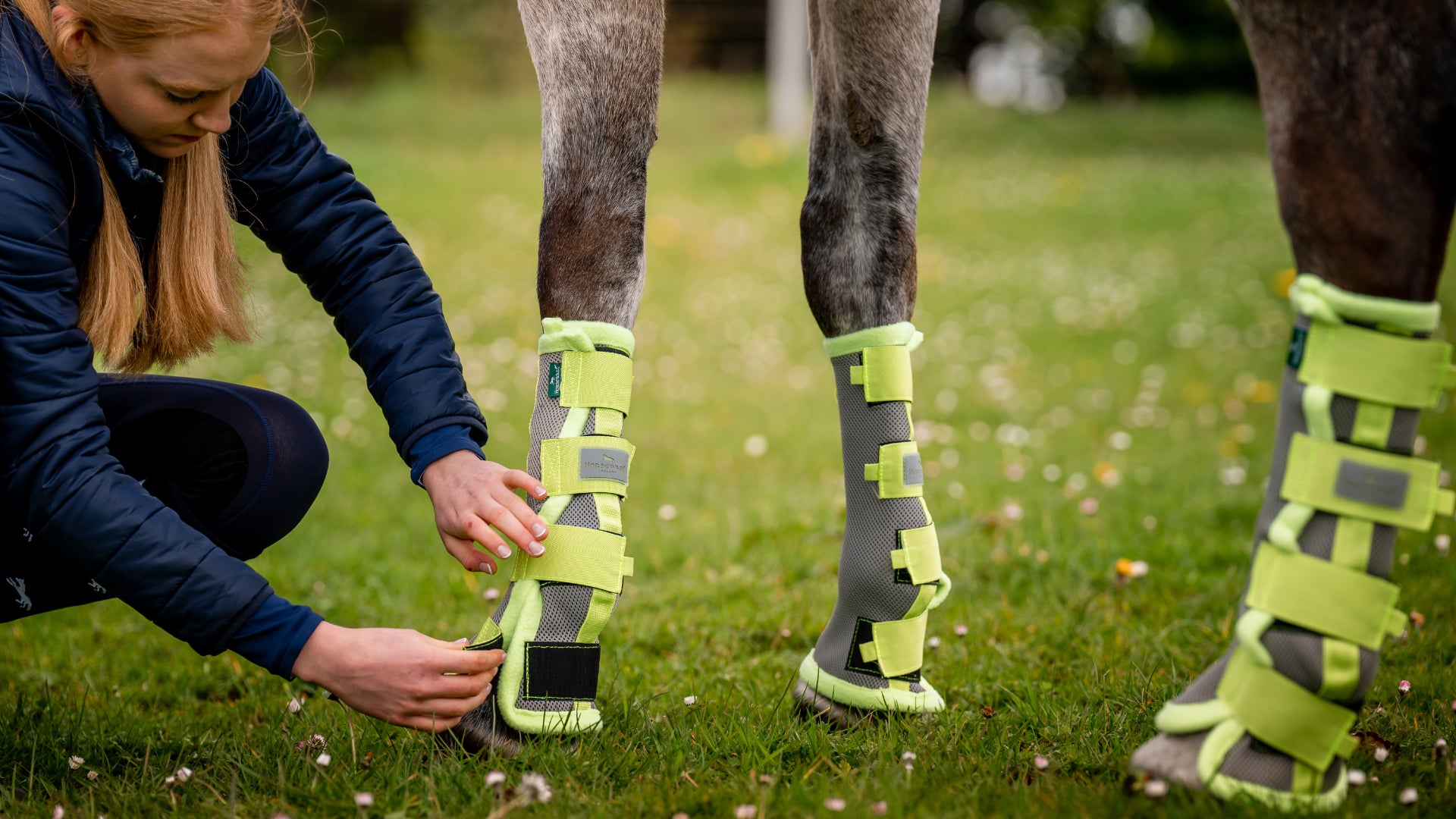
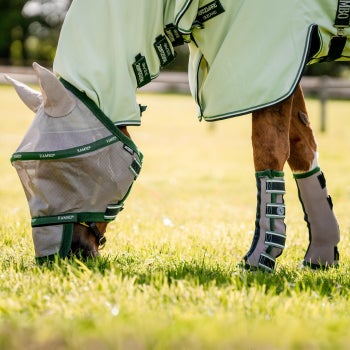
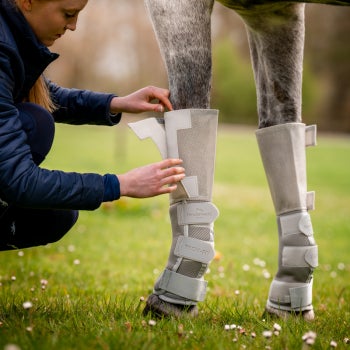
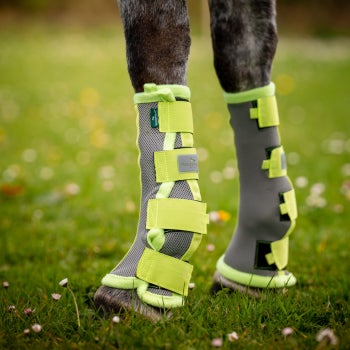
Flies aren't just annoying for horses. From the buzzing around their heads to painful bites on sensitive skin, these nasty pests can affect comfort and well-being.
This constant irritation often leads to behaviours like tail swishing, foot stomping, and even attempts to bite or rub against objects to alleviate the discomfort.
But the battle against these pests is over. Alongside fly sheets and other protective gear, fly boots shield horses from bothersome insects. This layer of defence has been shown to reduce fly annoyance behaviours and promote overall equine comfort.
In this guide, we cover everything you need to know about fly boots for horses. Find out why these boots are essential for your horse, learn step-by-step how to choose and use them effectively, and get some tips to make the most of them.
Don't let pests get the best of your companion because a happy horse means happy riding.
What are Horse Fly Boots?
How Do Fly Boots Work & Why Do Horses Need Them?
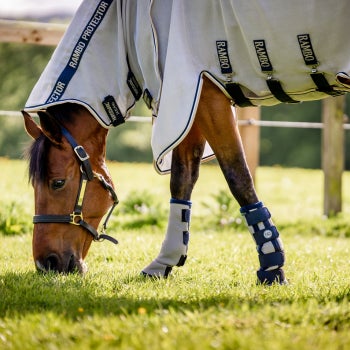
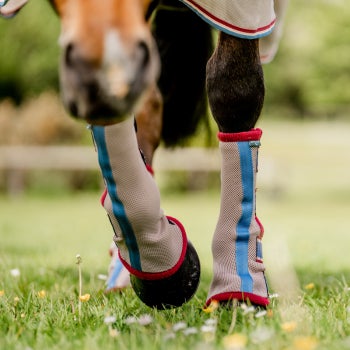
Fly boots work by providing a physical barrier between your horse's legs and those annoying insects. Made from breathable mesh or other lightweight materials, these boots cover the lower legs, preventing flies from landing and biting while staying cool.
This simple yet effective design keeps your horse comfortable and free from the constant irritation of fly bites.
Horses need fly boots for several reasons. For one, the loud buzzing and bites from flies can cause horses to bite their sides, stomp, kick, swish their tails, buck, and run. Actions like excessive stomping, for instance, can damage their hooves.
Moreover, fly boots can help prevent infections and other health issues. Horse and deer flies can transmit equine infectious anaemia, which can be fatal. Fly boots keep flies at bay. This not only improves your horse's quality of life but also makes your time together more enjoyable, whether you're riding, training, or simply spending time at the stable.
Benefits of Horse Fly Boots
How To Use Fly Boots for Horses: A Step-by-Step-Guide
Protective fly boots work best if you use them correctly. Let's walk you through the process of fitting, using, and maintaining fly boots for your horse. Follow these steps to keep your horse happy, healthy, and fly-free.
Inspect the Fly Boots
Make sure your horse's fly boots are in good shape before you put them on. Check for any signs of wear and tear, like frayed edges or broken straps, to prevent discomfort and offer maximum protection.
Prepare the Horse
Get your horse ready by keeping it calm and relaxed. Tie them up in a safe area or have someone hold them steady. A relaxed horse will make the process smoother for everyone.
Clean the Horse's Legs
Clean your horse's legs before applying the fly boots to remove dirt, debris, or moisture. This relieves irritation and ensures the boots fit snugly. Use a soft brush or a damp cloth to gently clean the legs. Don't forget to pay special attention to the areas where the boots will be placed.
Position the Fly Boot
Carefully position the fly boot around your horse's leg. Make sure the boot covers the lower leg, including the fetlock and pastern. The top of the boot should sit comfortably below the knee or hock.
Secure the Straps
Once the fly boot is in place, secure the straps. Start at the bottom and work your way up. Fasten each strap snugly but not too tight. The goal is to keep the boot secure without restricting blood flow or causing discomfort.
Check the Fit
After securing the straps, check the fit of the fly boots. They should be snug but not tight, allowing your horse to move freely without the boots slipping or rotating. Make sure there's no pinching or rubbing. Adjust the straps if necessary.
Monitor Regularly
It's important to regularly check your horse's fly boots throughout the day. Look for any signs of irritation, shifting, or wear. Make adjustments as needed to maintain a secure and comfortable fit. Also, remove the boots daily to clean and inspect your horse's legs to make sure nothing's wrong.
Top Tips for Choosing the Best Horse Fly Boots
Fly season for horses can be a pain, so fly boots are a worthwhile investment. With so many options available, it's hard to know where to start. Here are the factors to consider when choosing the best horse fly boots.
Materials and Durability
Look for durable yet breathable fabrics like mesh or lightweight synthetic materials. These protect against flies and allow airflow to keep your horse's legs cool and comfortable.
Durability is crucial, especially if your horse spends a lot of time outdoors or moves around a lot. Choose fly boots that are well-constructed with reinforced seams and strong closures. The boots should be able to withstand wear and tear for long-lasting protection season after season.
Fit and Comfort
Comfort is key when choosing fly boots for your horse. If they don't like it, they won't wear it. Go for boots that fit comfortably around the fetlock, pastern, and lower leg without restricting movement. Look for features like soft fleece or padded linings around the edges to prevent rubbing and irritation.
Consider the design of the boots as well. Anatomically shaped boots that contour to your horse's legs provide a better fit and comfort. Adjustable closures such as Velcro straps or buckles allow you to customize the fit for your horse's unique leg shape. This ensures they stay secure without being too tight.